The UK’s £500 Plug-in Motorcycle Grant closed on 5 April 2026, and no replacement scheme has been announced. The industry estimates the change could remove around £50 million from the electric motorcycle market by 2030. That makes the purchase price of an electric bike matter more than it has in years, which is exactly why a clear-eyed comparison is worth your time.
At V2C, Spanish manufacturers of charging infrastructure for electric mobility, we follow this transition well beyond the car. Here are the ten best electric motorcycles on the market in 2026, with real prices, the range they actually deliver, the licence you need for each one, and where the incentives stand today.
Table of Contents
- 1 Benefits of buying the best electric motorcycles and scooters
- 2 Top 10 best electric motorcycles and scooters in the UK for 2026
- 2.1 NIU U Pro, the cheapest way in at £1,559
- 2.2 NIU M+, 80 miles for £1,916
- 2.3 Super Soco CUX, the commuter’s pick at £2,624
- 2.4 NIU N Series Cargo, built for deliveries at £3,166
- 2.5 NIU NGT, 100 miles for £3,196
- 2.6 Super Soco TC Max, the all-rounder from £4,499
- 2.7 Maeving RM1, built in Britain from £4,995
- 2.8 Govecs Go! S1.5, the German option at £4,995
- 2.9 Vespa Elettrica, the icon at £5,622
- 2.10 Silence S01, the trolley battery at £5,900
- 2.11 Maeving RM1S, the fast British one at £7,495
- 2.12 BMW C Evolution, the premium maxi-scooter at £14,025
- 2.13 Above this list: full-size electric motorcycles
- 3 What you need to know before buying an electric motorcycle
Benefits of buying the best electric motorcycles and scooters
Electric motorcycles have positioned themselves as an interesting and sustainable alternative to internal combustion vehicles. They offer economic and sustainable advantages, as well as subsidies that make them increasingly attractive to consumers.
- Sustainable Advantages: Electric motorcycles are an effective solution for reducing harmful gas emissions. They do not emit carbon dioxide or other harmful gases during operation, directly contributing to reducing the carbon footprint and combating climate change.
- Economic Savings: Price is key when choosing an electric motorcycle. However, costs can vary depending on battery capacity and motor power.
It is important to evaluate the price-quality ratio, also considering long-term savings on fuel and maintenance. With the Plug-in Motorcycle Grant now closed, those long-term savings carry more weight in the decision than they did a year ago. Electric motors also mean fewer expenses and less maintenance by eliminating the need for oil changes, spark plugs, air filters, or exhaust systems.
What incentives are there for buying an electric motorcycle in 2026?
The honest answer for UK buyers is that the main one has gone. The Plug-in Motorcycle Grant ended on 5 April 2026 after a one-year extension. While it ran, it covered 35% of the purchase price up to £500 on electric motorcycles costing £10,000 or less, and it helped more than 15,000 riders switch to electric.
No replacement scheme has been announced for two-wheelers. The Electric Car Grant, by contrast, was extended to 2029-30 with an additional £1.3bn, which is why the Motorcycle Industry Association has described the situation as a cliff edge: its economic analysis suggests the change could cost the market around £50 million and roughly 6,500 fewer zero emission motorcycles sold by 2030.
What remains are the running-cost advantages rather than a purchase discount: zero road tax for fully electric motorcycles, exemption from the London Congestion Charge and ULEZ compliance, and far lower fuel and servicing costs than a petrol equivalent. Several local authorities also offer free or discounted parking for electric two-wheelers.
Elsewhere in Europe the picture is very different. Italy still applies an Ecobonus worth up to €4,000 with scrappage, Spain’s Plan Auto+ discounts up to €1,100 at the point of sale, and Portugal’s Fundo Ambiental has offered up to €1,500 per application.
Top 10 best electric motorcycles and scooters in the UK for 2026
This ranking covers the models actually on sale in the UK, with UK prices in pounds. It runs from cheapest to most expensive and spans both mopeds you can ride on a CBT and the 125cc-equivalent machines that need an A1 licence.
| Model | Licence | Price (as of 09/2026) | Range |
|---|---|---|---|
| NIU U Pro | AM / CBT | £1,559 | up to 20 miles |
| NIU M+ | AM / CBT | £1,916 | up to 80 miles |
| Super Soco CUX | AM / CBT | £2,624 | up to 40 miles |
| NIU N Series Cargo | AM / CBT | £3,166 | up to 60 miles |
| NIU NGT | A1 / CBT | £3,196 | up to 100 miles |
| Super Soco TC Max | A1 / CBT | from £4,499 | up to 60 miles |
| Maeving RM1 | A1 / CBT | from £4,995 | up to 80 miles (dual battery) |
| Govecs Go! S1.5 | AM / CBT | £4,995 | up to 40 miles |
| Vespa Elettrica | A1 / CBT | £5,622 | up to 60 miles |
| Silence S01 | A1 / A2 | £5,900 | up to 60 miles |
| Maeving RM1S | A1 | £7,495 | 65 mph top speed |
| BMW C Evolution | A2 | £14,025 | up to 100 miles |
A note on range: manufacturer figures are measured in ideal conditions. In real-world riding, and especially in winter, expect 20 to 30% less.
NIU U Pro, the cheapest way in at £1,559
The NIU U Pro is the lowest-priced electric moped on sale in the UK at £1,559. The trade-off is obvious in the spec: up to 20 miles of range, so it only makes sense for short, repeated city trips with charging at both ends.
- Price: £1,559
- Range: up to 20 miles
- Licence: AM, or CBT
NIU M+, 80 miles for £1,916
The NIU M+ is the outlier of the budget end. At £1,916 it claims up to 80 miles, which is four times the U Pro’s range for around £350 more. On paper it is the best range-per-pound on this list by some distance.
- Price: £1,916
- Range: up to 80 miles
- Licence: AM, or CBT
Super Soco CUX, the commuter’s pick at £2,624
The Super Soco CUX is one of the cheapest electric scooters on the UK market, at £2,624. It runs a Bosch motor and offers up to 40 miles of range, which has made it a common sight among urban commuters.
- Price: £2,624
- Motor: Bosch
- Range: up to 40 miles
- Licence: AM, or CBT
NIU N Series Cargo, built for deliveries at £3,166
The NIU N Series Cargo is aimed squarely at delivery riders and small businesses, at £3,166, with up to 60 miles of range and load-carrying capacity built in rather than bolted on.
- Price: £3,166
- Range: up to 60 miles
- Use case: deliveries and light commercial
- Licence: AM, or CBT
NIU NGT, 100 miles for £3,196
The NIU NGT claims up to 100 miles, the longest range on this list until you reach the £14,000 BMW, and it costs £3,196. If range is the thing you care about most and your budget stops around £3,000, this is the obvious answer.
- Price: £3,196
- Range: up to 100 miles
- Licence: A1, or CBT
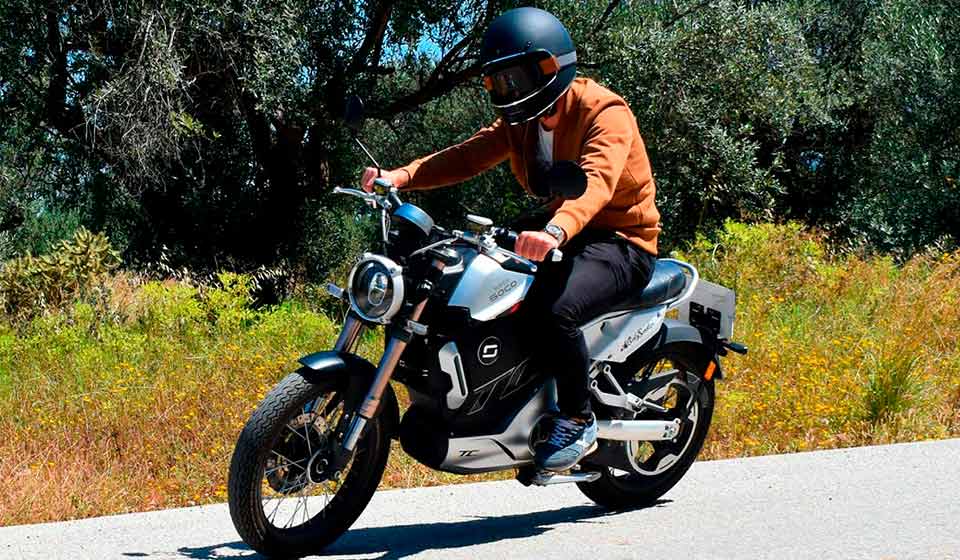
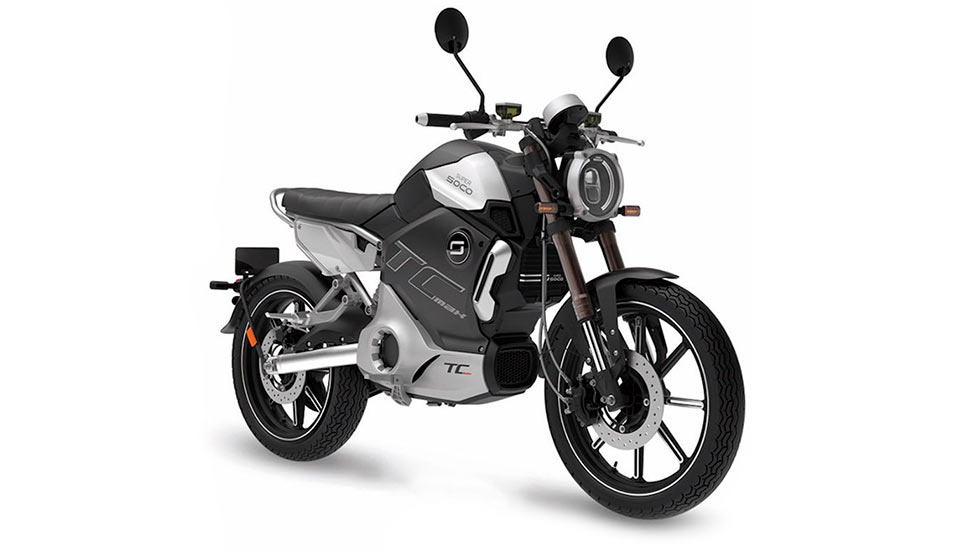
Super Soco TC Max, the all-rounder from £4,499
The Super Soco TC Max is the award-winning all-rounder of the UK electric bike market, from £4,499. The emphasis is on urban riding, but unlike most of the list it can stretch its legs on the open road, which is what separates it from the moped-class machines below it.
There is also the Vmoto Super Soco TSx if you want something that looks more like a motorcycle: 17-inch wheels, upside-down front forks, mono rear suspension and a high-performance Bosch motor, with up to 64 miles of range and a 3 to 4 hour charge on a fast charger.
- Price: from £4,499
- Range: up to 60 miles
- Charging: 7-8 hours standard, 3-4 hours on a fast charger
- Licence: A1, or CBT
Maeving RM1, built in Britain from £4,995
The Maeving RM1 is the one on this list that is built in Britain, in Coventry, and it leans into that with classic styling over modern electric hardware. It starts at £4,995, with the 80-mile dual-battery version from £5,990.
Its practical advantage is the removable batteries: you take them inside and charge them from a normal socket, which matters if you park on the street. Top speed on the standard model is up to 45 mph.
- Price: from £4,995 (80-mile version from £5,990)
- Range: up to 80 miles with dual batteries
- Top speed: up to 45 mph
- Batteries: removable
- Licence: A1, or CBT
Govecs Go! S1.5, the German option at £4,995
The Govecs Go! S1.5 comes from the German manufacturer and costs £4,995, with up to 40 miles of range. The larger Go! S3.6 sits at £7,495 with up to 60 miles.
- Price: £4,995 (Go! S3.6: £7,495)
- Range: up to 40 miles (60 miles on the S3.6)
- Licence: AM, or CBT
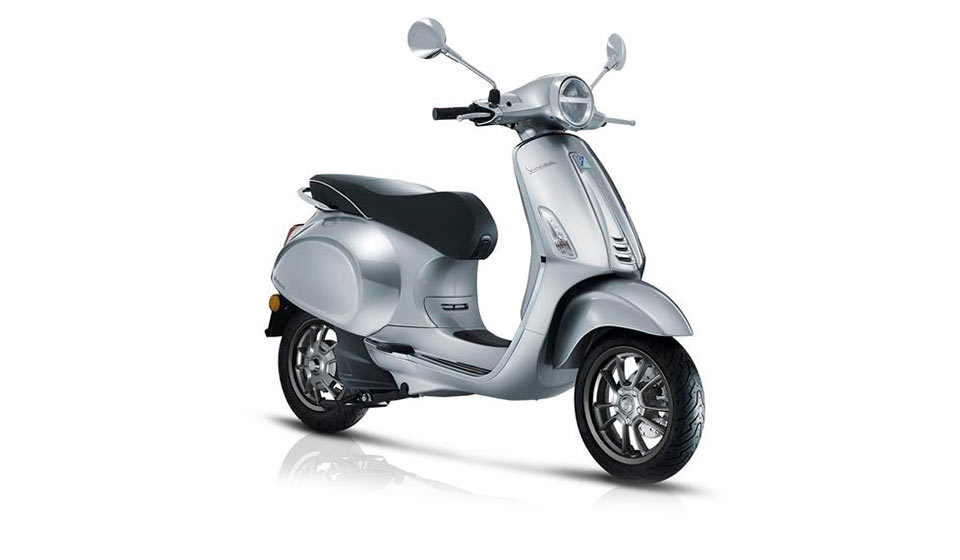
Vespa Elettrica, the icon at £5,622
The Vespa Elettrica keeps the styling that made the brand recognisable worldwide, in a zero-emissions package, at £5,622 with up to 60 miles of range. You are paying for the design and the badge, and that is a perfectly reasonable thing to buy.
- Price: £5,622
- Range: up to 60 miles
- Licence: A1, or CBT
Silence S01, the trolley battery at £5,900
The Silence S01 performs in the 125cc to 250cc range, which makes it a sensible choice for A2 licence holders, and it costs £5,900. It has an extra-large seat that genuinely takes two riders.
Its signature feature is the wheeled trolley system for removing the double battery pack: you pull it along like a suitcase and charge it indoors from a normal socket. The S01+ version puts out 13 bhp, weighs 130 kg, claims 67 miles in ECO mode and charges in 4.5 hours.
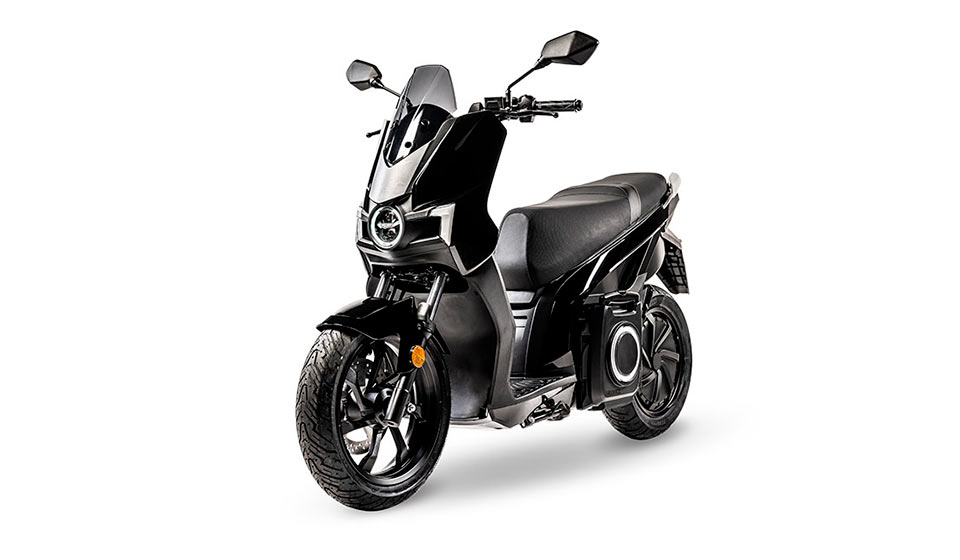
- Price: £5,900
- Power: 13 bhp (S01+)
- Range: up to 60 miles (67 miles ECO on the S01+)
- Charging: 4.5 hours
- Licence: A1 or A2
Maeving RM1S, the fast British one at £7,495
The Maeving RM1S is the performance version of the Coventry-built RM1, at £7,495. It raises the top speed to 65 mph, which takes it out of strictly-urban territory, and blends café-racer styling with the same removable-battery practicality.
- Price: £7,495
- Top speed: 65 mph
- Batteries: removable
- Built: Coventry, UK
- Licence: A1
The BMW C Evolution is the most expensive machine on this list at £14,025, with up to 100 miles of range and an A2 licence requirement. Like the rest of BMW’s electric two-wheelers, it charges at considerably higher power than the moped-class models, which is closer to electric-car logic than scooter logic.
- Price: £14,025
- Range: up to 100 miles
- Licence: A2
Above this list: full-size electric motorcycles
Beyond these commuter machines, the UK market has proper electric motorcycles that need a full A licence, from Zero Motorcycles, LiveWire, Energica and Honda.
One word of warning on that last group: Energica Motor Company filed for judicial liquidation on 14 October 2024. Some dealers still list its models from remaining stock, but check warranty and parts availability before committing.
What you need to know before buying an electric motorcycle
Before buying an electric motorcycle, it is essential to research the available models and, if possible, conduct test rides. This will allow you to evaluate aspects such as comfort, acceleration and braking response, maneuverability, noise level, and battery range. These elements are crucial to ensuring a satisfying and safe driving experience.
What licence do you need to ride an electric motorcycle?
The licence you need depends on the motor’s power output, exactly as it does with petrol bikes. Because electric bikes are rated in kW rather than cc, the equivalence is the single most common question from riders considering the switch.
- AM licence (from 16): electric mopeds up to 4 kW and 45 km/h, the equivalent of a 50 cc.
- A1 licence (from 17): up to 11 kW, the equivalent of a 125 cc. This covers the Silence S01, the Super Soco TC Max, the NIU NGT, the Maeving RM1 and the Vespa Elettrica.
- A2 licence (from 19): up to 35 kW, the category the BMW C Evolution and the Silence S01 sit in.
- A licence (from 24, or from 21 through progressive access): no power limit, required for a full-size machine such as a Zero SR/F or a LiveWire.
In practice, most riders start with Compulsory Basic Training (CBT), which lets you ride a machine up to 11 kW on L plates for two years without a full test. It is the quickest legal route onto most of the bikes in this ranking, though you cannot carry a passenger or use motorways until you pass the full A1 test.
How many kilometers can the best electric motorcycles Travel?
Range is an important feature and refers to the distance a motorcycle can travel on a full battery charge. The cheapest motorcycles typically offer around 80 km of range, ideal for daily commutes. Some models below 6,000 € can reach up to 137 km. Calculate your daily needs and choose a motorcycle with adequate range to avoid issues on your trips.
What speed can an electric motorcycle reach?
Maximum speed should be suited to the type of use you plan for the motorcycle. For urban use, speeds of 50-70 km/h are usually sufficient. For highways and long journeys, consider models with speeds of 90-120 km/h. Compare the maximum speeds between different models to find the most suitable one according to your needs and traffic conditions.
What is the average charging time of an electric motorcycle?
The charging time of an electric motorcycle can vary significantly. Electric motorcycles can have charging times ranging from a couple of hours to more than eight hours. Options include fast charging, which is ideal for quick recharges, and conventional charging, suitable for overnight charges. Ensure you have the proper installation requirements at home, such as special outlets or dedicated chargers, to optimize charging time. Consult a professional to ensure your home is prepared.