
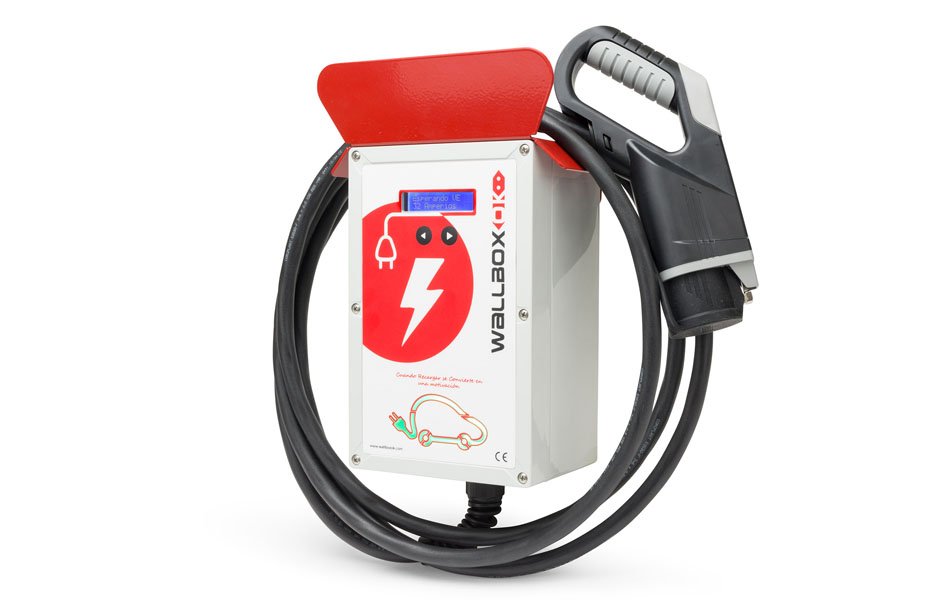
We use the term Wallbox to refer to the fixed point for charging electric vehicles. The Wallbox refers to the physical system that supplies electrical power to the connected vehicle via a cable. This device, powered by alternating current, in single-phase or three-phase mode, combines several components that make the complete system an integral charging system.
What fundamental features does the Wallbox have?
Although there are different models of fixed charging points for electric vehicles, we can gather the fundamental functions of the Wallbox to protect the electrical system to which the car is connected and to protect the batteries.
Although there are different models of fixed charging points for electric vehicles, we can choose the fundamental functions of the wallboxes to protect the electrical system to which the car is connected and to protect the batteries.
- The Wallbox serves to protect against electric shocks and prevents voltage spikes during the charging process to harmonize the current power. In this way, the wallboxes protect the batteries of electric cars.
- The Wallbox is used to protect against electric shock and to avoid voltage spikes during the charging process to harmonize the current power. In this way, the Wallbox protects the batteries of electric cars.
- The Wallbox serves to always know the electricity consumption, measuring the energy consumed. This function is very useful because its use avoids surprises in electricity bills and even resolves conflicts in case it is installed in a community parking lot.
- The Wallbox can be used to schedule charging processes for electric vehicles when rates are cheaper.
Where are Wallboxes installed?
The Wallbox or “fixed charging point” is installed, as the name suggests, on the wall of the garage where the electrical installation must be made. This device receives power from the home or garage installation.
What types of connectors do Wallboxes use?
These fixed charging points (as they are also called) are prepared to manage electrical power using various types of connectors. It is important to remember that not all electric vehicles have the same connection to the network. We can find connections ranging from a schuko (connection with a normal household plug) to specific connections for certain models such as the Sae J1772, Mennekes, or Chademo. These connectors give us the opportunity to connect our vehicle to the network.
Here are some examples of electric vehicles and their specific network connections:
– Nissan Leaf with Chademo and Sae J1772 charging connectors.
– Renault Fluence with Sae J1772 connector.
– Renault Kangoo with Sae J1772 connector.
– Renault Twizy with schuko connector.
– Peugeot Ion with Sae J1772 connector.
– Volkswagen Golf with Mennekes connector.
– Renault Zoe with Mennekes connector.
– Chevrolet Volt with Sae J1772 connector.