
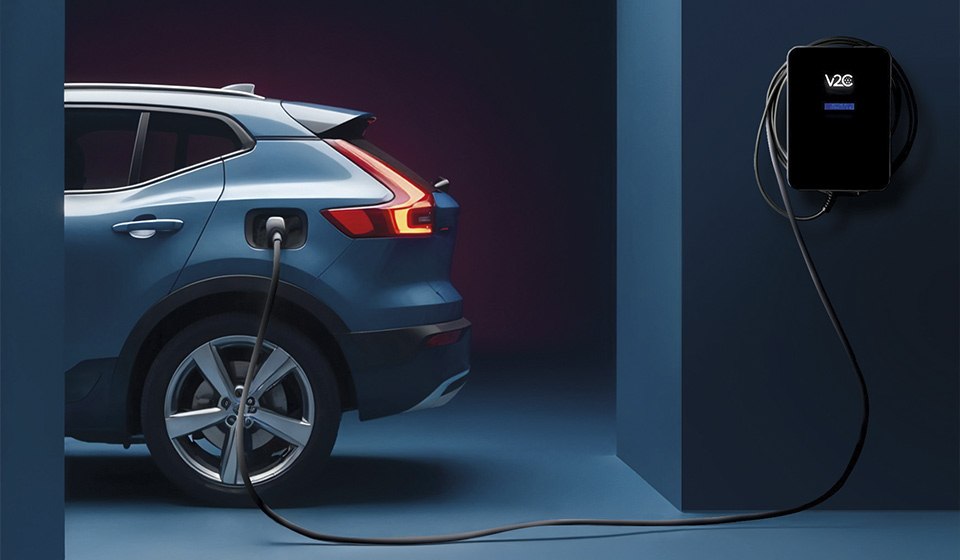
The Trydan and Trydan Pro chargers from V2C are compatible with two-phase installations (125 V + 125 V), three-phase three-wire installations without neutral (125 V + 125 V + 125 V), and three-phase 125/230 V without neutral. In all of these, the 230 V needed to charge the vehicle is obtained by combining two phases (L1 + L2) instead of phase and neutral.
Next, we explain what your installer should consider for dynamic balancing to work correctly in each case.
Table of Contents
⚠️ Key point: electrical protections
Before discussing meters, there is a fundamental rule to comply with the ITC-BT-52 regulation:
- Trydan with integrated protections (1P+N) is not compatible with these networks. The internal components are designed to cut phase + neutral; in your installation, you need to cut both phase wires simultaneously. Request the standard charger without protections and ask your electrician to install an external panel with circuit breakers and bipolar differentials (2P).
- Bipolar surge protectors (2P): the transient and permanent protectors in the panel must also be bipolar and certified for networks without neutral. A conventional single-phase protector will not function correctly.
Scenario 1 — Two phases at 230 V (L1 + L2)
The most common case: supply that arrives through two phase wires without neutral.
Compatibility: total. Both the Controlbox 2.0 and the standard V2C Bidirectional Meter work perfectly.
How to install the measuring clamp: place a single clamp embracing only one of the two phase wires (for example, just L1). Do not use two clamps or embrace both wires at the same time, as the readings would cancel each other out.
Scenario 2 — Three-phase three-wire without neutral (L1 + L2 + L3)
Three-phase supply without a neutral wire. The measurement requires a specific configuration so that dynamic balancing does not generate errors.
Option A — Controlbox 2.0
The Controlbox 2.0 is compatible, but it requires a software adjustment to correctly read the line voltage.
- Installation: place the three clamps, one on each phase (L1, L2, and L3).
- Mandatory configuration: it is necessary to adjust the line voltage to 125 V via software. Without this change, the equipment will add unnecessary consumption and limit charging for no reason. Ask your installer to contact V2C Technical Support during the commissioning; the equipment will apply the configuration remotely.
Option B — External network analyzer (recommended with solar)
If in addition to dynamic balancing you have solar panels and want to take advantage of the surpluses, the Controlbox 2.0 is not enough and the standard V2C Bidirectional Meter is not compatible with three-wire three-phase networks (it will not start).
Recommended solution: install an advanced network analyzer like the Carlo Gavazzi — the same technology used in the V2C Pole Meter. These devices are configured in “3 Phases 3 Wires” mode, measure with total accuracy, and communicate seamlessly with your Trydan to manage both dynamic balancing and solar charging.
Do you have questions about your installation?
If you are unsure which scenario applies to your case, contact our V2C Technical Support team before starting. A specialized technician will guide you on the most suitable solution for your installation.