
2018 is the year when most European cities, including cities like Madrid and Barcelona in Spain, will implement their pollution protocols due to the increase in pollution levels. Thus, traffic restrictions for vehicles in cities will be constant.
However, electric vehicles will be exempt from these restrictions; in fact, the advantages of having an electric car in Madrid are numerous. Electric cars pay lower taxes, are exempt from regulated parking fees, have free access to Residential Priority Areas (APR), will have advantages during high pollution episodes, and electric cars can use the Bus-Vao lane.
For all these reasons, companies are increasingly incorporating electric vehicles into their fleets. Electric cars are ideal for delivery functions in the case of e-commerce, they are the best solution for employees, and in any case, they are the option to avoid these traffic restrictions.
In light of this new landscape, many questions arise regarding electric cars, which is why most of the inquiries we receive are about what type of chargers companies should buy for their range of vehicles.
So, we will explain the different scenarios to resolve doubts about what type of charger is used by each of the common electric vehicle models in company fleets.
Companies can choose from three types of charging points, wall-mounted charging points or wallboxes, portable charging points, or charging posts.
Depending on the power at which the electric car can be charged and the power available at the installation where you plan to place the charging point, at the time you intend to charge.
Types of connectors for electric cars.
Kia Soul Kia Soul EV MY18.
- Type of charger for the electric car Kia Soul Kia Soul EV MY18. The Kia Soul EV has a Type 1 connector (SAE J1772 Cable).
- The full charging time for the Kia Soul EV can range from about 7 hours (charging in mode 3, 16-32 Amperes) to 10 hours, charging in mode 2 or from portable chargers.
- The approximate cost calculation for charging an electric Kia Soul will always depend on the rate contracted at home; however, approximately, the cost would be €1.2 on a standard rate (€0.13/kW) and €0.60 on a night rate (€0.06/kW).
- The KIA SOUL electric has a range of 212 km. on a full charge thanks to its battery capacity of 27 kWh.
Nissan Leaf electric.
- The NISSAN LEAF has a Type 1 connector (SAE J1772 Cable).
- The charging time for the Nissan Leaf will depend on the battery charging capacity of our Nissan Leaf; the full charging time at a mode 2 charging point can range from 11 to 13 hours. At a type 3 charging point with a three-phase socket, the full charging time decreases to 4-7 hours.
- Cost of Charging NISSAN LEAF. The approximate cost calculation for charging a NISSAN LEAF will always depend on the rate contracted at your home; however, approximately, the cost would be €0.8 on a standard rate (€0.13/kW) and €0.4 on a night rate (€0.06/kW).
- Range of NISSAN LEAF. The NISSAN LEAF has a range of up to 278 km. thanks to its charging capacity (from 24 to 40 km/h).
Nissan e-NV200 EVALIA electric.
- The NISSAN e-NV200 EVALIA has a Type 1 connector (SAE J1772 Cable).
- The total charging time for the Nissan e-NV200 EVALIA is about 8 hours charging at 32A in single-phase; and about 4 hours charging with a three-phase socket.
- Cost of Charging NISSAN e-NV200 EVALIA. The approximate cost calculation for charging a Nissan e-NV200 EVALIA will always depend on the rate contracted at home; however, approximately, the cost would be €0.8 on a standard rate (€0.13/kW) and €0.4 on a night rate (€0.06/kW).
- The Nissan e-NV200 EVALIA has a range of 170 km.
Mitsubishi I-MIEV electric.
- The MITSUBISHI I-MIEV has a connector known as Type 2 (also called Mennekes – IEC 62196 – Chameleon).
- Charging Time MITSUBISHI I-MIEV. The MITSUBISHI I-MIEV completes a full charge of its 16 kWh battery in 8 hours (charging in mode 2 single-phase, 10A).
- Cost of Charging MITSUBISHI I-MIEV. The approximate cost calculation for charging a MITSUBISHI I-MIEV will always depend on the rate contracted at home; however, approximately, the cost would be €0.8 on a standard rate (€0.13/kW) and €0.4 on a night rate (€0.06/kW).
- Range of MITSUBISHI I-MIEV. The MITSUBISHI I-MIEV with a 16 kWh battery has a range of about 160 km.
Peugeot iON electric.
- The PEUGEOT ION has a Type 1 connector (SAE J1772 Cable).
- The Peugeot iON completes a full charge of the battery in a period of 6 to 11 hours on a single-phase socket of 8A – 14 A.
- The approximate cost calculation for charging a PEUGEOT ION will always depend on the rate contracted at home; however, approximately, the cost would be €1.20 on a standard rate (€0.13/kW) and €0.60 on a night rate (€0.06/kW).
- The PEUGEOT ION has a battery that allows for up to 167 km. of range.
Citroën C-Zero Electric.
- The CITROËN C-ZERO has a Type 1 connector (SAE J1772 Cable).
- The charging power of the CITROËN C-ZERO allows for a full charge in 6 hours in mode 3 (230V at 16A) and an 80% recharge in 30 minutes in mode 4 (fast charging at public posts at 400V / 32 Amperes).
- Cost of Charging a CITROËN C-ZERO. The approximate cost calculation for charging a CITROËN C-ZERO will always depend on the rate contracted at your home; however, approximately, the cost would be €0.80 on a standard rate (€0.13/kW) and €0.40 on a night rate (€0.06/kW).
- Range of CITROËN C-ZERO. The CITROËN C ZERO has a range of 150 km., which provides ample margin for daily urban or interurban trips.
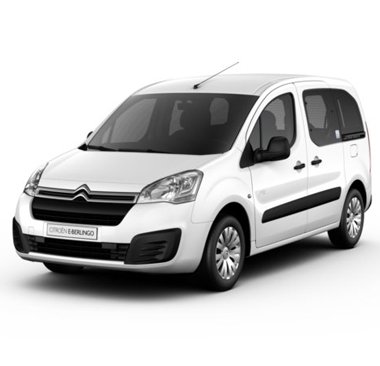
CITROËN E-BERLINGO electric.
- The CITROËN E-BERLINGO has a Type 1 connector (SAE J1772 – Yakazi).
- The Citroën E Berlingo can complete a full charge in 8 hours with a mode 3 installation (7.7kW, three-phase socket) or in 11 hours with a mode 2 charging point (2.2 KW, single-phase socket). The final charging time will depend on the combination of various factors: car capacity, installation characteristics, type of socket, etc.
- The approximate cost calculation for charging a CITROËN E-BERLINGO electric will always depend on the rate contracted at your home; however, approximately, the cost would be €0.80 on a standard rate (€0.13/kW) and €0.40 on a night rate (€0.06/kW).
- The CITROËN E-BERLINGO has a range of 150 km., which provides ample margin for daily urban and interurban trips.
Ford Focus Electric.
- The Ford Focus Electric has a Type 1 connector (SAE J1772 cable).
- The Ford Focus electric allows charging at 6.6kW in direct current at 120V and 240V. It also allows for fast charging in Direct Current.
- The estimated cost calculation for charging a Ford Focus electric will always depend on the rate contracted at home; however, approximately, the cost would be €1 on a standard rate (€0.13/kW) and €0.60 on a night rate (€0.06/kW).
- The battery of the Ford Focus electric has a capacity of 35 kWh., which provides a range of about 160 km. in urban trips.
Hyundai IONIQ electric.
- The Hyundai IONIQ has a Type 2 connector (Mennekes – IEC 62196 – Chameleon).
- The charging time for the Hyundai IONIQ electric will be about 12 hours in mode 2 charging and about 4 and a half hours in mode 3 in three-phase charging.
- The approximate cost calculation for charging a Hyundai IONIQ will always depend on the rate contracted at home; however, approximately, the cost would be €0.8 on a standard rate (€0.13/kW) and €0.4 on a night rate (€0.06/kW).
- The Hyundai IONIQ has a battery that allows for up to 280 km. and a charging capacity of 28 kWh.
In a future article, we will expand the information on electric car charging points according to the electric car model.